The Three-Light Test: Choosing Bedding Colours That Work After Dark

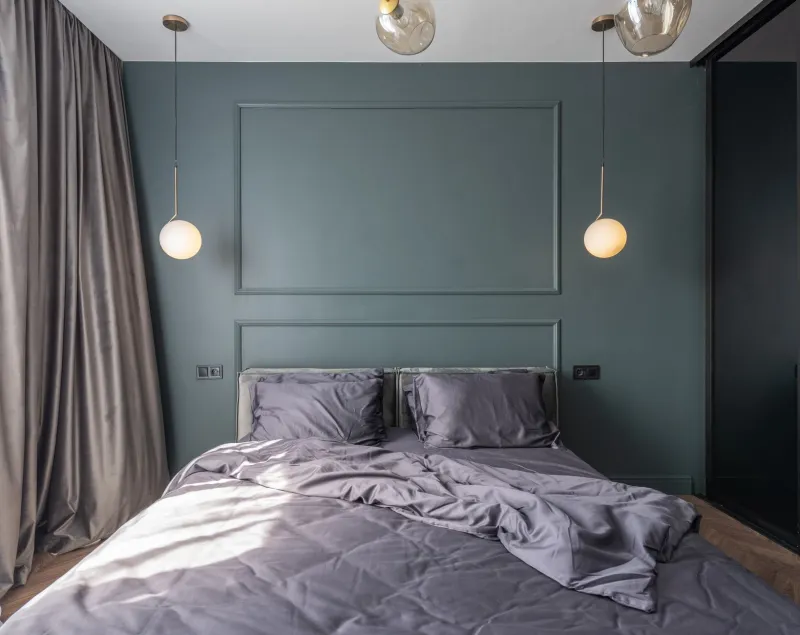
Photo: bedding fabric colour swatches on bed under warm bedside lamp light in UK bedroom, via m.media-amazon.com
There is a particular kind of disappointment that comes from unpacking a new duvet cover, making the bed, switching on the bedside lamp, and realising the colour you bought is not the colour in the room. In daylight it was a clean, modern grey. At 11pm it looks faintly mauve. Or the white that seemed so fresh on the shop shelf now reads as creamy yellow against your painted wall.
This is not you being fussy. Bedding colour is unusually sensitive to light. We choose it in one environment — often a bright shop floor, a phone screen, or a sunny weekend afternoon — and live with it in another. In the UK, that other environment is frequently a north-facing bedroom in November, lit by a warm bulb and whatever glow comes through the curtains from a streetlamp.
So before you buy another full set based on a square of fabric the size of a beer mat, try the three-light test. It takes a weekend, costs nothing extra if you use what you already own, and saves the slow irritation of a bed you do not quite like.
Why a safe colour stops being safe after dark
Colour is not fixed to an object. It is a conversation between the fabric, the light hitting it and your eye. Change the light and you change the conversation.
Most UK bedrooms now mix at least two light sources: daylight through a window and an artificial bulb in the evening. Daylight itself changes through the day. A bright morning can make a pale blue pillowcase look almost white. By late afternoon, the same blue can look heavier and greyer. Once the lamp is on, a warm white bulb around 2700K will push whites towards cream, cool greys towards green, and some blues towards ink.
Then there is the wall colour, the headboard, the rug and the wardrobe doors. Bedding does not sit in isolation. A soft grey duvet against brilliant white walls can look calm at 7am and slightly dingy at 11pm. The same grey against a warm off-white wall may feel softer in the evening and flatter in the morning. Neither is wrong. They are just different rooms after dark.
The three-light test
You do not need professional equipment. You need a swatch, a lamp and a small amount of patience.
1. Get a real piece of fabric
If you are buying from a shop, ask whether there are fabric samples or take home the smallest item you can return — a pillowcase rather than a whole set. Online, check the returns policy before ordering. Many UK retailers accept unused bedding back within a set period, but washed or removed-from-packaging items are usually excluded. A single pillowcase is a cheap way to test a colour without committing to a duvet cover, sheet and two pillowcases.
If you already own something in the colour family, use it. A grey T-shirt is not a duvet cover, but it will tell you whether your bedroom lamp pulls grey warm or cold.
2. Test at 7am, 4pm and 11pm
Place the fabric on the bed, not on the floor or against a window. Look at it at three times:
- 7am: early daylight, curtains open, room lights off. This is the colour you will see when you are half awake and deciding whether to get up.
- 4pm: the fading end of the afternoon, especially in autumn and winter. This is when many UK bedrooms look their dullest.
- 11pm: your actual bedside lamp, your actual bulb, your actual curtains closed. This is the colour you will see for the last hour of your day.
Do not use your phone camera as the judge. Phone cameras adjust white balance automatically, so the photo can look warmer or cooler than the room. Your eye is the better test.
3. Change one thing at a time
If the colour looks wrong at 11pm, try a different bulb before blaming the bedding. A cool white bulb will make blues and greys look sharper. A warm bulb will make creams and taupes feel cosier but can make brilliant white look yellow. If you cannot change the bulb, change the bedding colour instead. That is the practical order of operations.
What tends to shift, and what tends to hold
Crisp whites are the most sensitive. Optical brighteners make them look brilliant in daylight and slightly blue under cool LEDs, but warm bulbs can turn them creamy. If you want a white that stays white-looking at night, check it under the lamp, not just in the shop.
Mid-greys are the classic trap. A cool grey can look elegant in daylight and slightly green or purple under a warm bulb. A warmer greige is usually more forgiving at 11pm, but can look muddy in a bright morning room. There is no universal safe grey. There is only a grey that works in your bedroom.
Soft blues often darken dramatically after dark. A pale sky blue can look almost white by day and shadowy at night. Navy is more stable, but it absorbs light, so a navy bed in a small room can feel heavy unless you add lighter layers.
Warm neutrals — oat, sand, soft clay — are generally kind under lamplight. They can, however, look flat in a north-facing room with no direct sun. Texture helps more than colour here.
Style for both ends of the day
A bed does not need to look identical at 7am and 11pm. It needs to look intentional at both. The easiest way to do that is to layer.
Start with a base that works under your evening lamp — usually a white, warm neutral or mid-tone that does not go strange under warm light. Add texture rather than more colour: a waffle throw, a washed cotton pillowcase, a ribbed cushion. Texture catches lamplight and gives the bed depth when flat colour would look dull.
If you love a cool grey or pale blue, anchor it with warmer whites and a wooden or upholstered headboard. If your bedroom is already warm-toned, a soft blue can act as a clean contrast rather than a cold one. And if the room is rented and you cannot paint, remember that bedding is doing more visual work than you think. A duvet cover is often the largest block of colour in the room.
The 11pm checklist
Before you buy, ask yourself:
- Have I seen this colour under a warm bulb, not just shop lighting?
- Does it work against my wall, headboard and curtains?
- Can I return it if it looks wrong once it is on the bed?
- Have I got a lamp I can change, or am I expecting the bedding to fix the light?
- Will I still like it when the mornings are dark and the curtains are closed?
The best bedding colour is not the one that photographs well on a shop display. It is the one that still feels right when you are tired, the lamp is on and you are about to get into bed. Test it at 11pm and you will make a better decision by 7am.