Cold Sheets, Warm Duvet: Where Your Bed’s Heat Actually Goes

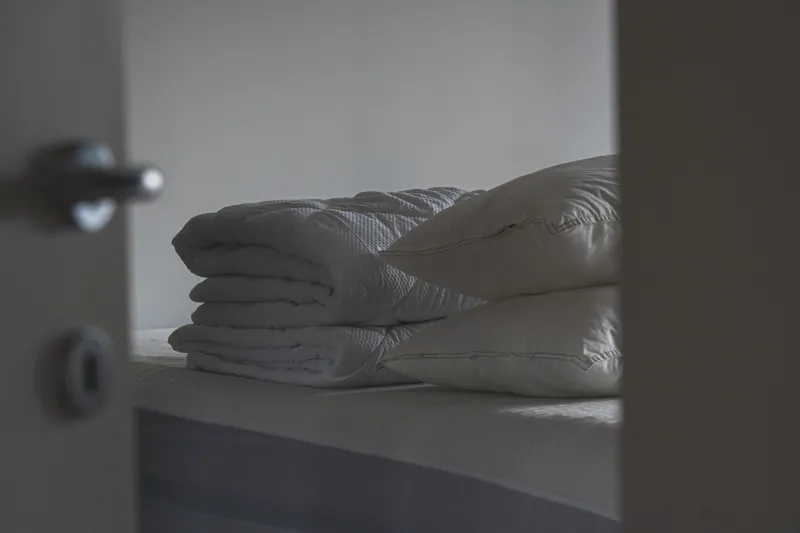
Photo: cold bedroom winter morning duvet bed UK home, via static.independent.co.uk
There’s a particular kind of disappointment that comes with sliding into bed on a cold November night, under a duvet you specifically bought to be warm, and finding that the sheets feel like they’ve been stored in the fridge. The instinct is to blame the tog. Surely a 13.5 tog should be enough? Shouldn’t a heavier duvet solve this?
Not necessarily. A duvet is not a radiator. It doesn’t generate heat; it slows down the rate at which your body heat escapes. If heat is leaking out through gaps, if the filling has gone flat, or if your mattress is acting like a giant cold sponge, a hotter duvet can just make you clammy in the middle and chilly at the edges. Before you spend another penny on tog ratings, it’s worth working out where the warmth is actually going.
Start with the gap, not the tog
A duvet only insulates the area it covers. In the UK, a standard double duvet on a standard double bed leaves very little overhang once two people are in it, and if either of you moves, cold air gets pulled in at the sides. A duvet that’s too small for the bed — or too small for the sleepers — creates a draught channel right where you need warmth most.
This is why some people find that sizing up helps more than turning up the tog. A king-size duvet on a double bed gives you enough material to drape over the edges and tuck in at the foot, which traps a layer of still air around the mattress. You don’t have to buy a new duvet to test the principle: try tucking the foot end of your current duvet under the mattress and see whether your feet feel warmer within a few nights. If they do, fit is part of your problem.
The air inside your duvet is doing the insulating
A duvet works because its filling holds pockets of air. Down clusters and synthetic fibres trap warmth in those pockets. When the filling is compressed, clumped or flattened, the air disappears and so does the insulation — no matter what the label says about tog.
So give your duvet a proper shake before you make the bed. Not a token flap, but a real lofting: hold it by the top corners, shake it out, and let the filling settle. If you store it vacuum-packed or squashed under other bedding, give it a day or two to recover. If it’s a synthetic duvet that’s been washed many times and has developed lumpy patches, no amount of shaking will bring it back.
Also pay attention to construction. A cheap sewn-through duvet has stitching lines where there’s no filling at all, and those lines can feel cold against your skin. Baffle-box or cassette construction keeps the filling distributed more evenly. It’s not a marketing detail; it’s the difference between a duvet that feels warm across its whole surface and one that has cold stripes.
Your mattress is a heat sink
We tend to think of the mattress as neutral, but it isn’t. A cold mattress surface pulls heat away from your body when you first get in. Memory foam can feel particularly chilly because it’s dense and slow to warm up. If your bed sits against an external wall, or if the underbed area is cold and draughty, the mattress itself may never quite reach a comfortable temperature.
A mattress topper is often a more effective fix than a hotter duvet. A wool or microfibre topper adds a layer of insulation between you and the mattress, and it warms up much faster than foam. A thick mattress protector does a similar job. You can also pre-warm the bed with a hot water bottle or an electric blanket — just remember to turn the blanket off before you sleep, and don’t leave a hot water bottle in one spot all night.
Layers beat a single tog number
A high-tog duvet is a blunt instrument. It’s warm all the time, which is great in January and miserable in a mild October or a overheated flat. Layers give you control.
Start with the sheet. A cotton percale sheet feels crisp and cool, which is lovely in summer but can feel chilly in winter. Brushed cotton or flannel sheets are a simple seasonal swap that makes a surprising difference to that first ten minutes in bed. On top, a wool blanket between the sheet and the duvet — or over the duvet — adds warmth without weight. A throw at the foot of the bed lets you add or remove a layer without remaking the whole bed.
This is also why a heavier duvet isn’t always the answer. Weight and warmth are not the same thing. A heavy synthetic duvet can press down on you, reduce the loft of the filling and make you sweat, and then when you throw it off you’re cold again. A lighter duvet with a good layer underneath often feels more comfortable and more stable through the night.
The room around the bed matters more than you think
You can have the perfect bedding stack and still sleep cold if the room is working against you. Beds pushed against cold external walls lose heat through the wall. Radiators blocked by furniture or long curtains don’t circulate warmth properly. Draughts from windows, letterboxes or old floorboards pull warm air away from the bed.
A few low-effort fixes: move the bed a few centimetres away from the wall if you can, keep the space under the bed clear so air can move, close curtains at dusk, and put down a rug if you have bare floors. If your bedroom feels damp, a dehumidifier can make it feel warmer at the same temperature, because damp air feels colder against the skin.
A five-minute cold-bed audit
Before you buy anything, run through this little checklist:
- Does your duvet overhang the mattress by at least a hand’s width on both sides?
- Can you tuck the foot end under the mattress without pulling the duvet off your shoulders?
- Does the duvet feel flat or lumpy when you shake it?
- Is the mattress surface cold to the touch before you get in?
- Are your sheets crisp cotton percale rather than brushed cotton or flannel?
- Is there a draught at floor level or around the head of the bed?
- Is the bed against an external wall or directly under a window?
- Do you make the bed in the morning, or leave the duvet crumpled?
What to change first
Start with the free fixes. Shake and re-loft the duvet. Make the bed properly so the filling settles. Tuck in the foot end. Add a blanket you already own. Move the bed away from the wall if you can. Then move on to the cheap swaps: brushed cotton sheets, a mattress topper, a hot water bottle. Only after that should you consider changing the duvet itself — and if you do, think about fit and construction as much as tog. A well-fitting 10.5 tog duvet with a wool blanket and a warm mattress topper will often beat a badly fitting 15 tog duvet with nothing underneath it.
The cold-bed problem is rarely solved by one number on a label. It’s a small system of fit, air, surface temperature and layers. Fix the leaks first, and you may find the duvet you already own is warmer than you thought.