The Laundry-Rack Bedroom: Drying Bedding in a Flat When the Weather Won't Help
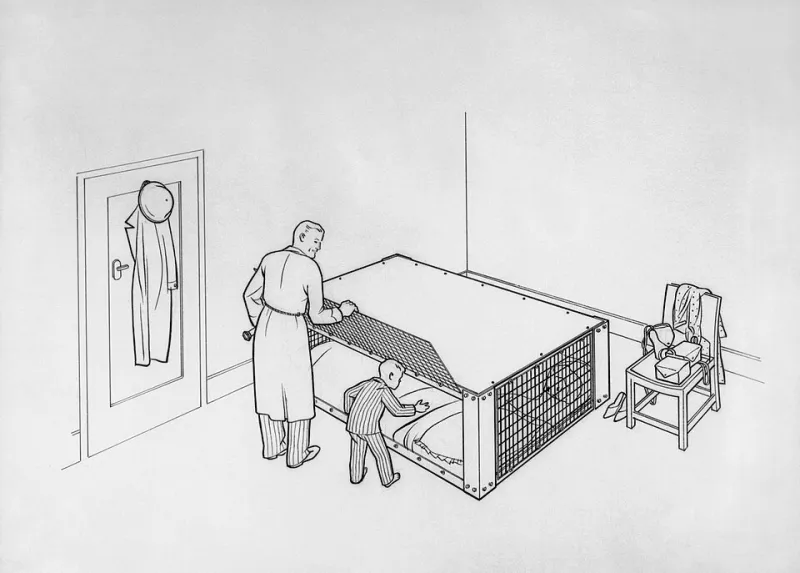
Photo: Ministry of Information Photo Division Photographer, Public domain, via Wikimedia Commons
Bedding is one of those purchases you make for sleep, then spend the rest of the year trying to wash. In a house with a garden and a tumble dryer, a duvet wash is an afternoon. In a rented flat in November, with a heated airer wedged between the wardrobe and the wall, it is a logistical event. Bubble Bedding is pro-good bedding, not pro-faff, so here is the honest version of drying bedding without a dryer.
Check the care label before you create a problem
Care labels are not just there to be cut out because they itch. Before anything goes near the machine, check two things: whether it can be washed at all, and what the drying instructions actually say. 'Machine washable' does not automatically mean 'easy to air-dry in a one-bed flat'. A king-size 13.5 tog duvet crammed into a 7kg drum is not really being washed; it is being given a lukewarm bath and a rough time.
A few label traps worth knowing:
- 'Tumble dry low' is permission, not an instruction. If you have no dryer, you can still air-dry it, but shake it out regularly and allow extra time.
- 'Do not tumble dry' often means the fibre or filling dislikes heat. Respect it. A hot radiator is not a loophole.
- 'Dry clean only' on a silk or wool duvet is usually there for a reason. If you ignore it, do so knowing the risk.
- 'Dry flat' on a pillow or mattress protector means exactly that. Hanging a heavy damp pillow by one corner is a good way to give it a weird shape and a short life.
If the label has long since vanished, be cautious with feather and down, memory foam and anything with a delicate cover. Hollowfibre and cotton are generally more forgiving.
Realistic indoor drying times, not the optimistic ones
Indoor drying times depend on airflow, room temperature and how much water the item is holding after the spin cycle. In a normal heated flat with an airer, a fan or a dehumidifier, expect roughly this:
- Pillowcases: 3 to 5 hours.
- Sheets: 4 to 8 hours.
- Duvet covers: 6 to 10 hours.
- Hollowfibre duvets: 12 to 24 hours, with turning.
- Pillows: 24 to 36 hours, depending on filling.
Those times stretch quickly in a cold room, a bathroom with no extractor fan or a flat where the airer is surrounded by furniture. A thick duvet that is still cold and damp at the 24-hour mark is not 'nearly there'. It needs more airflow, not wishful thinking.
Airflow beats radiator heat
Nothing dries well in a sealed box. The goal is moving air, not simply warmth. A dehumidifier with a laundry setting is genuinely useful in a flat, especially in November when outside air is damp and windows are mostly shut. A cheap floor fan pointed at the airer can do more than an extra hour on the radiator.
A few practical moves:
- Use the smallest room with a door and a window, not the bedroom you sleep in, if you can.
- Crack a window for ventilation, even briefly, and use the extractor fan if there is one.
- Drape items over two rails rather than one so air can move through the fabric.
- Turn everything every few hours. Duvet covers especially like to hide damp in the corners.
- Give bedding an extra spin cycle before hanging. It is the cheapest drying upgrade you can make.
Draping wet bedding directly over a radiator feels efficient, but it often creates a pocket of damp warmth and blocks the heat from the room. Better to keep the airer near the radiator, not touching it, and let the air circulate.
The damp smell is a stop sign
If bedding smells musty, like a wet dog or a forgotten gym bag, it is not dry. Do not put it away, and do not remake the bed with it. That smell usually means mildew has started in the filling or the seams. Rewash it with your normal detergent, check the label allows it, and dry it thoroughly before it goes anywhere near a cupboard.
This matters for more than freshness. Damp bedding can add moisture to a small bedroom, encourage condensation and make the room feel clammy. An airing cupboard is not a drying strategy; it is where damp bedding goes to develop a personality.
Fibres that forgive a British flat
If you are buying bedding and you know it will have to air-dry, choose fibres that cooperate:
- Cotton percale and plain cotton sheets dry reasonably quickly and cope well with regular washing.
- Microfibre dries fast, though some people find it less breathable and more prone to holding odour.
- Linen dries fairly well but creases like it has a personal grievance against you.
- Brushed cotton and flannel are cosy but slower to dry because they are thicker.
- Hollowfibre duvets and pillows are much easier to air-dry than feather and down, which clumps when damp.
- Wool is breathable but can be slow and fussy. Bamboo and lyocell sit somewhere in the middle.
- Memory foam pillows are usually not machine washable at all. Spot clean them and keep a washable protector on top.
A spare set of easy-dry sheets is not glamorous, but it is more useful than a beautiful set you cannot wash in winter.
A workable flat routine
Wash one layer at a time. Start with sheets and pillowcases, then the duvet cover, then the duvet itself if it really needs it. Keep a spare set so you are not stripping the bed and praying to the airer gods on the same day.
For duvets, consider a local launderette. A service wash and dry is often cheaper than replacing a mildewed duvet, and it gets the job done in an afternoon. Use it for the big items once or twice a year, and save your indoor airer for the weekly sheets.
Finally, do not remake the bed until everything is bone dry, including the inside corners of the duvet cover and the middle of the pillow. Dry bedding is not a luxury extra. It is the base layer of a good night's sleep, even when the laundry rack is still in the hallway.